Why they came at all
Austria took Bukovina in 1772, and the partitions of Poland began a year later. Vienna needed people for an empty land, and from Galicia, where the Polish nobility held the offices, the way was short. The first Russian census, of 1772–1773, counted 460 Poles in Bukovina, half a percent of the inhabitants. That was the beginning.
They came in order: miners, forest workers, landless peasants, officials, and last the lesser nobility, which took over the estates of boyars leaving for Moldavia. By 1880, some 40 to 45 percent of the one hundred and ninety large estates already belonged to Poles.
The Highlanders from the Czadca country
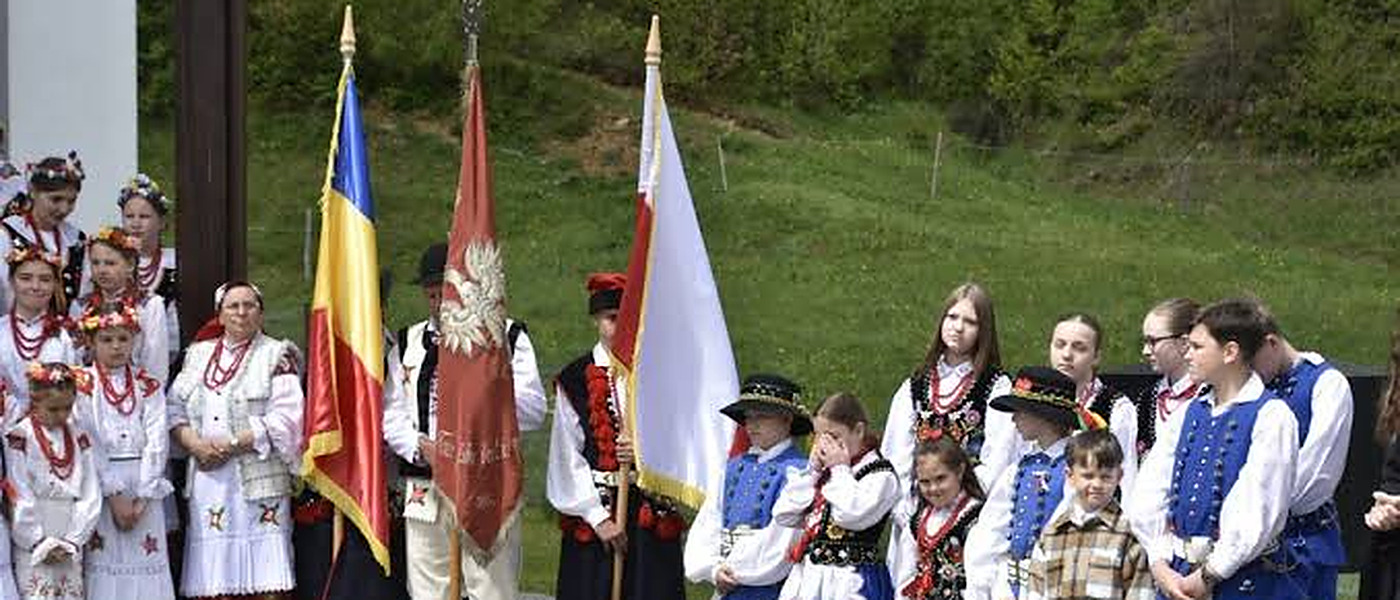
The largest group, however, were the Górale, the Highlanders. Their road begins in the 16th century, when fugitives from Silesia and Lesser Poland settled around Czadca, today on the Slovak side. At the turn of the 18th and 19th centuries they set off „after bread” to Austrian Bukovina; by 1803 they had reached the outskirts of Cernăuți. One of their villages was Stara Huta, and from there came those who would found the villages in the south: Solonețu Nou, Pleșa and Poiana Micului.
The peak and the collapse
At the last Austrian census, that of 1910, Bukovina held 36,210 Polish speakers, 4.5 percent of the population. Against 1880 the number had doubled. After the First World War and the union with Romania it fell to 34,119, because some returned to a reborn Poland.
Then came the collapse. The annexation of northern Bukovina by the USSR in 1940 cut off two thirds of Bukovina's Poles. By 1941, 20,057 remained in the whole province. After the war the repatriations began: from Poiana Micului alone 426 people left in 1946–1947, and from Ruda-Vicșani more than half the village, on a train of fifty carriages that took over a week to reach the so-called Recovered Territories.
What remained
Through the whole communist period the number held at 2,700 to 2,800 people in southern Bukovina. Since 1992 it has fallen by over forty percent. The 2021 census gives 1,667 people of Polish nationality in Suceava county: 75 percent of all the Poles in Romania, but only 0.25 percent of the county's inhabitants.
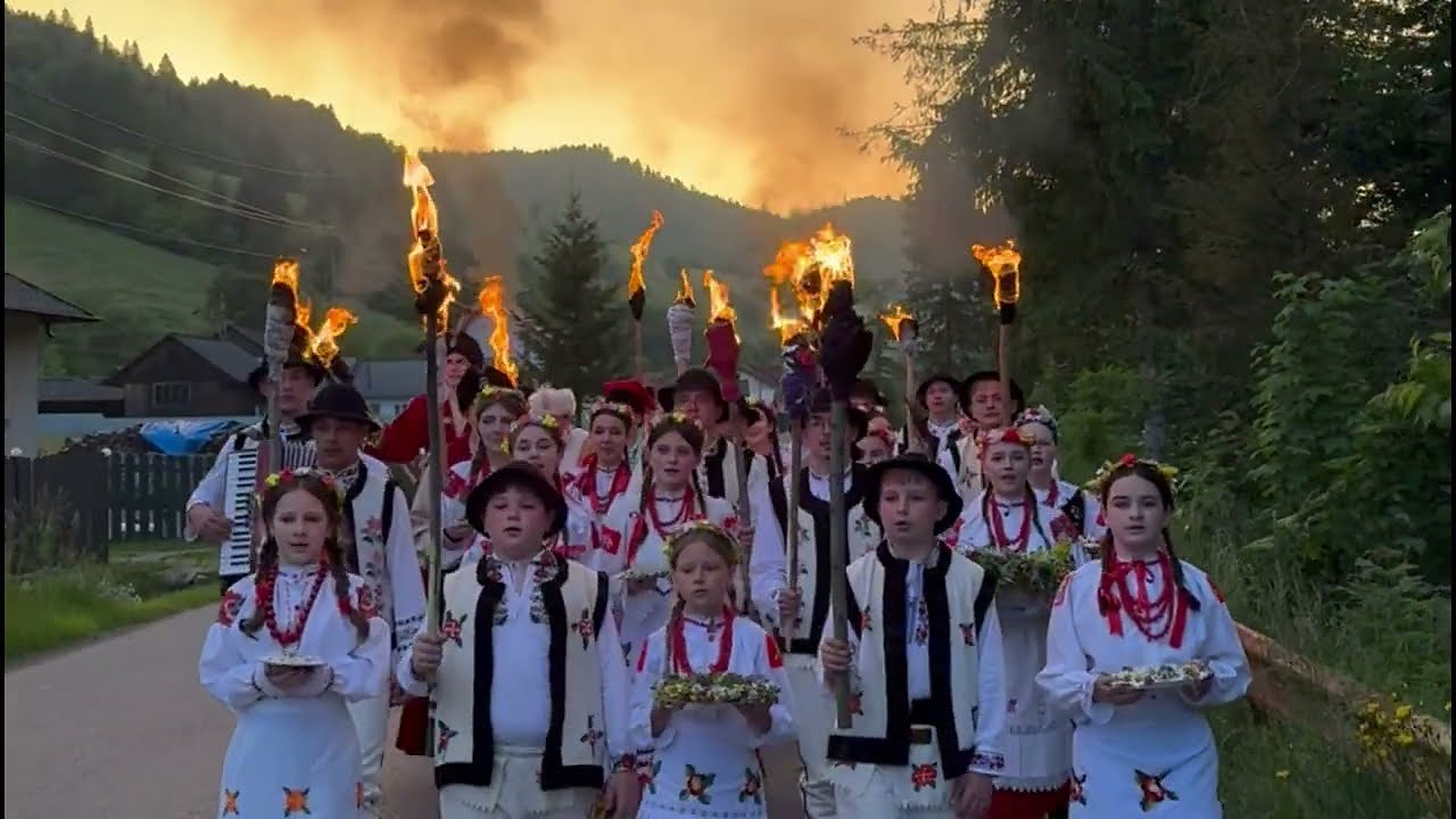
Behind that number, though, lies something else: ninety percent of them live in villages, in the same places as two hundred years ago. The community has shrunk, but it has not scattered.
The paradox of the last decades
The numbers fall, yet southern Bukovina's share of the whole Polish minority in Romania rises: from 24 percent in 1930 to 48 in 1966 and to a steady 73 to 78 percent after 2002. In other words, Polish Romania increasingly means these few villages near Suceava.
And one more thing, which runs against intuition. In the 2021 census, 1,173 people out of 1,667, that is 70 percent, gave Polish as their mother tongue. The author of the study calls this linguistic revitalisation and traces it to the school: the children learn Polish, and attachment to the language grows instead of fading. Among those declaring Polish as their mother tongue, the largest group is aged 45 to 54, at 18 percent, closely followed by children up to fourteen, at 14.6 percent.
The schools that are gone
In the school year 1912–1913 Bukovina had 564 primary schools, of which 15 were Polish, beside 219 Ukrainian, 190 Romanian and 97 German. That network vanished with Austria, with the border and with the war. What is left today is the teaching of Polish in the village schools and the work of the Polish Houses.
Before they set off at all
Six hundred years ago, Casimir the Great pushed Poland's borders down to Moldavia, because the trade road from the Baltic to the Black Sea ran this way. Poles and Romanians were neighbours long before anyone thought of moving.
The Highlanders themselves had reached the Czadca country earlier, in the 15th to 17th centuries: the western and central parts were settled from Silesia, the eastern by people from around Żywiec. After the third partition, around 1800, a large group moved on. They walked eight weeks, through Kraków and Lviv, as far as Brzeżany, where Princess Izabela Lubomirska had promised them land. Bukovina came only afterwards.
The year 1928: a thousand families
The interwar years were the height of this world. The Polish community in Bukovina then numbered around a thousand families and had everything it needed to endure: Roman Catholic churches, its own schools and libraries. In Suceava, the Polish Society for Fraternal Aid and Reading Room had worked since 1903, and marked its centenary already in a free Romania.
Then came the war, the confiscation of the building and the ban. And in 1992 the Union of Poles in Romania moved its seat from Bucharest to Suceava, because most of those it exists for live here.
Today it is taught at school
Since the early nineties Polish has returned to the schools as a mother tongue, without a break. In the school year 2015/2016 it was studied by 730 pupils in nine schools: in Suceava, Siret, Moara, Pleșa, Poiana Micului, Păltinoasa, Gura Humorului, Solonețu Nou and Cacica. Six teachers worked with them.
That figure explains the chart above: where the seven in ten who declared Polish as their mother tongue in 2021 come from. Not from sentiment. From lessons.
 Via Transilvanica