 Via Transilvanica
Przewodnik
Polish Bukovina
Five villages, one salt mine and two hundred years few people know about. A guide written on the spot.
Przewodnik
Five villages, one salt mine and two hundred years few people know about. A guide written on the spot.
You drive up the valley, between meadows still cut with a scythe, and suddenly a white and red flag hangs on a fence. Then another, on the next house. In the shop, two women argue amiably about the price of cheese, and not in Romanian.
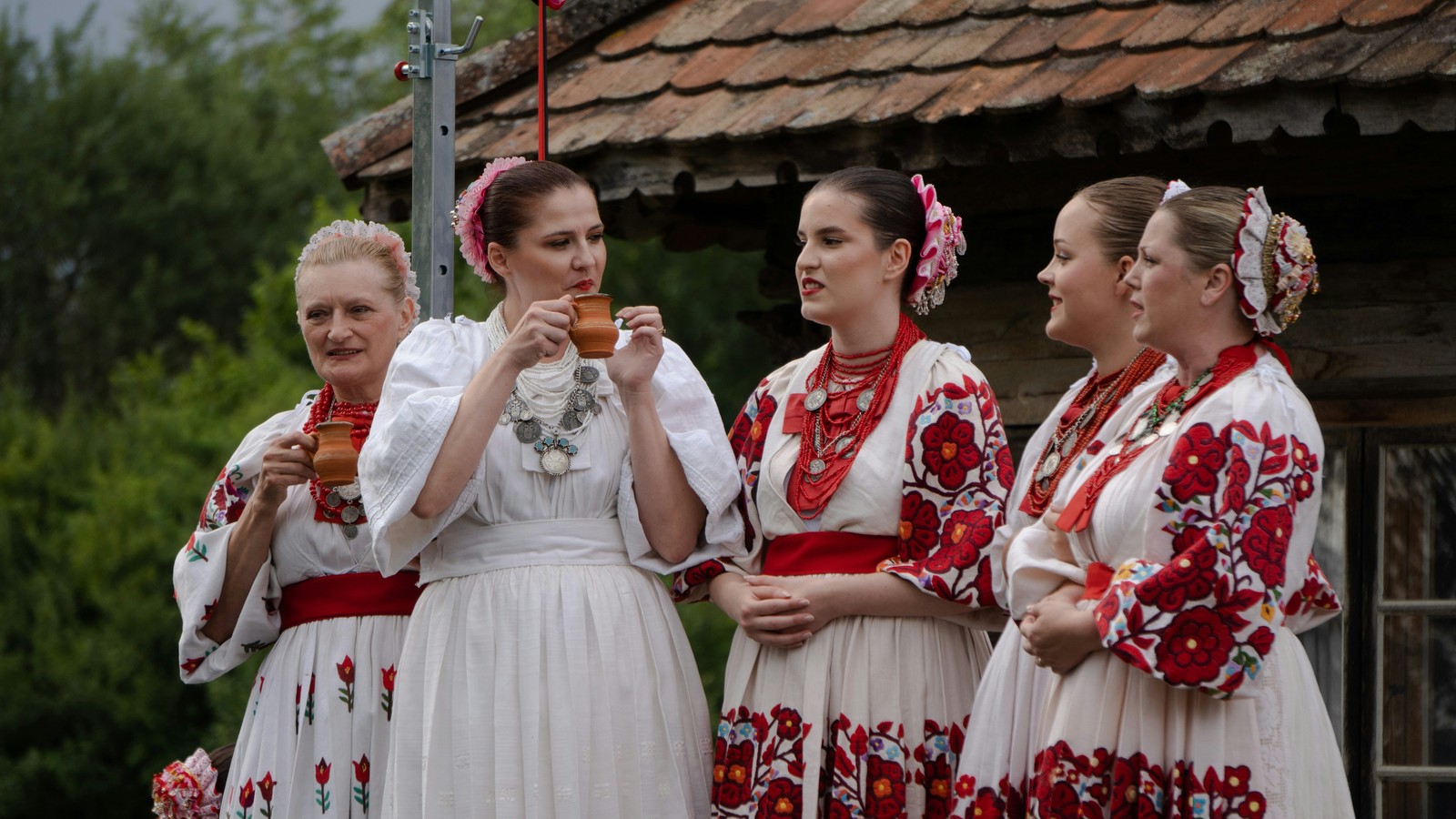
In Pleșa nearly everyone speaks Polish. In Solonețu Nou, nine in ten. Not because anyone decreed it, but because the language never had a reason to stop: it is spoken in the kitchen, in church and at funerals, which are the three places where a language actually lives.
It began prosaically. In 1792, miners from Bochnia came to cut salt at Cacica, because they knew salt better than anyone. Forty years later came Highlanders from the Czadca region, after land and forest. Salt and timber, not some grand idea, brought here a community that is still here.
Then came everything that might have erased that memory: the end of the empire, a new border, two wars, a village burned in a single night, the repatriation trains. And yet the language stayed, and the houses still go up with the same gates.
The finest thing is how all this looks from close up. The Polish villages sit between the Romanian ones, the orchards blossom in the same week, and at the patronal feast they sing in two languages without anyone finding it strange.
This guide walks those places unhurriedly, one by one: what happened here, who lives here today, what to eat, when it is worth coming and how it all fits into a day.

Two hundred years later
These flags hang in a Bukovina village, a thousand kilometres from Warsaw, on a house whose owners have never lived in Poland.
Each is a little over an hour from our gate. The rest of the guide is for reading; these four are for visiting.
Your base
Câmpulung Moldovenesc is an hour from the Polish villages and an hour from the painted monasteries. The whole house, seven beds, parking in the yard.