Journal · Soul and mountain · 7 September 2026 · 12 min
They say Rarău is the heart chakra of Romania. I don't know how to measure such a thing. I do know what happened to me one morning at the end of August, on the path from our gate to the Pietrele Doamnei, and I know that since then I climb differently.
I left the yard a little before five, in the dark, with a thermos in my pack and an old sorrow I'd been carrying for about two years. You don't need to know which. We all have one. It's the kind of weight nobody sees, but that makes you answer the phone curtly and stop noticing the cherry tree in the garden.
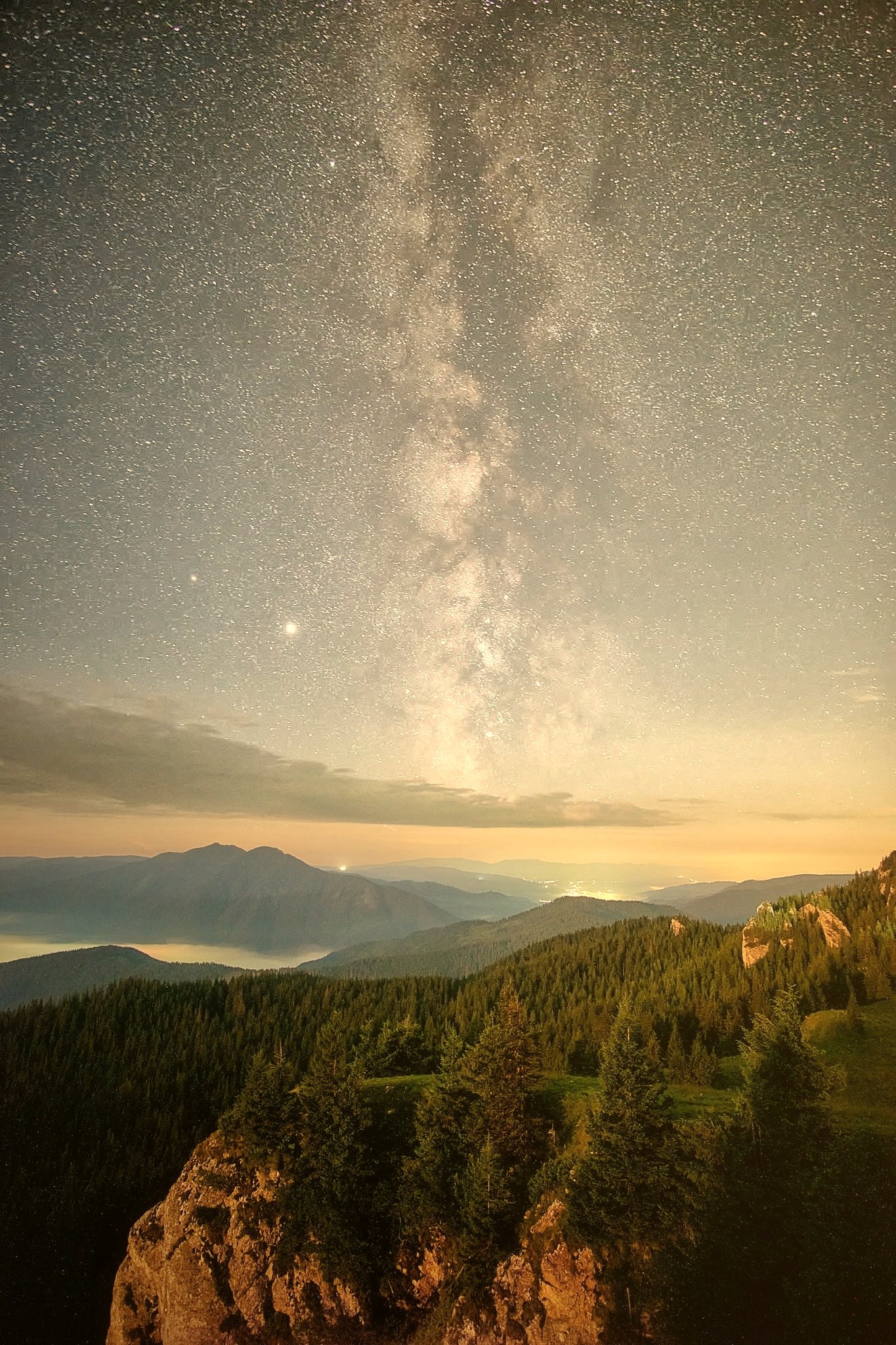
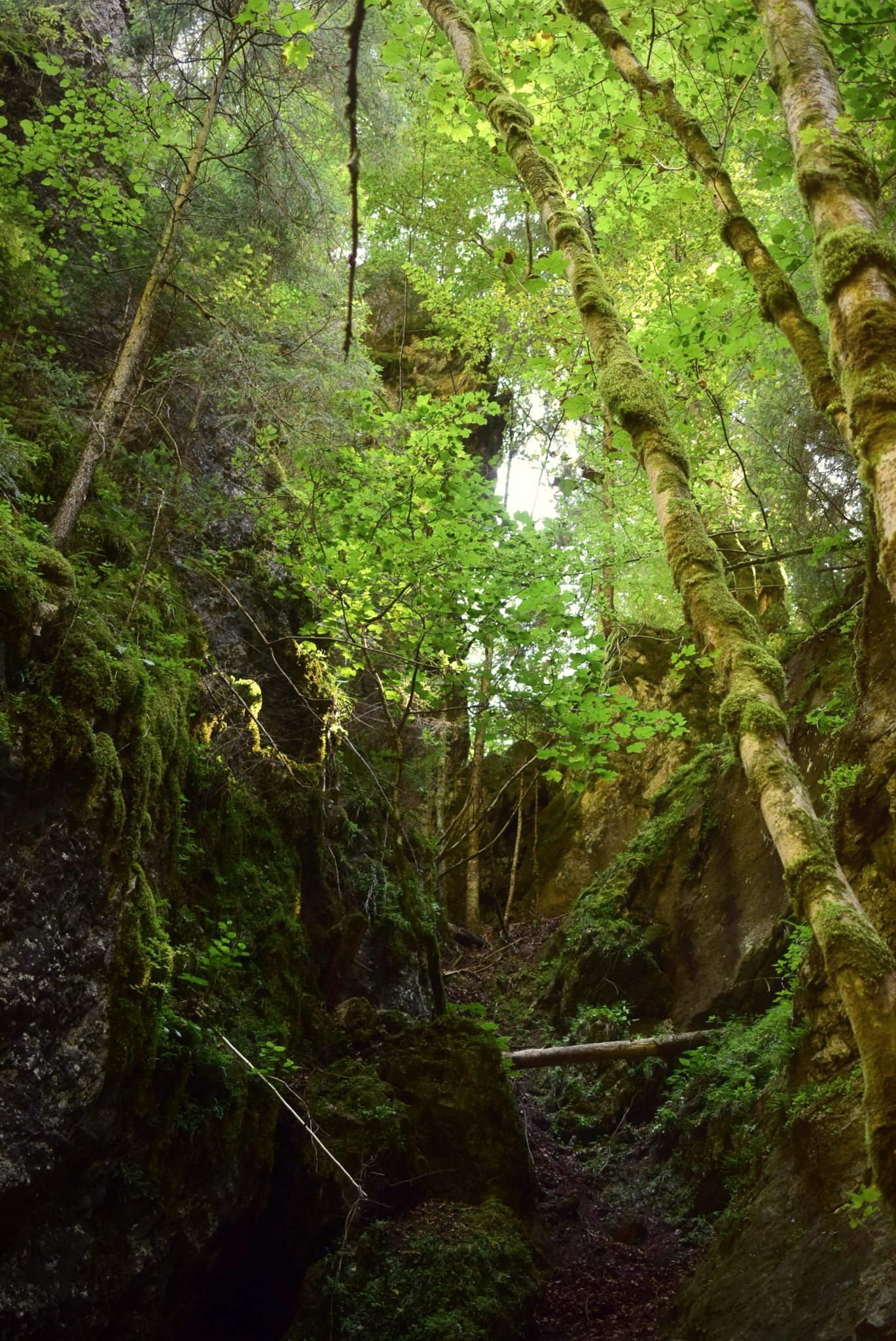
The path starts practically on Calea Transilvaniei, a kilometre from the house, on the blue stripe waymark, and the first kilometre and a half climbs through spruce forest, between Măgura Runcului and Runc. It's properly dark in there, even when it's getting light outside. I walk, I breathe, I hear my boots. After forty minutes or so a meadow opens and, around Prașca, the sun comes out straight ahead. Not yellow. Golden. The kind of light you're allowed only once a day and only if you got up.
There, without meaning to, I stopped. Not from tiredness. My chest opened on its own, like a door you've pushed against for a long time that suddenly stops resisting. I stood for about five minutes. I thought about nothing. When I set off again the sorrow was still there, but smaller. About the size of a fist. The size of a heart, if you like.
Bucovina has been called “our Athos”, and of Rarău it's said that the country's greatest hermits lived here and that “energy researchers” place the heart chakra here. In the tradition of those circles, Rarău, together with Câmpulung, would be Romania's fourth energy centre, the one of love and compassion, and its basic fear would be the fear of loneliness and of following your heart.
The Sanskrit word for the heart chakra, Anahata, means “unstruck”, “untouched”. I liked that more than any theory. It's not about a place where nothing strikes you. It's about the part of you that has stayed whole under all the blows. The mountain doesn't give it to you. It shows it to you.
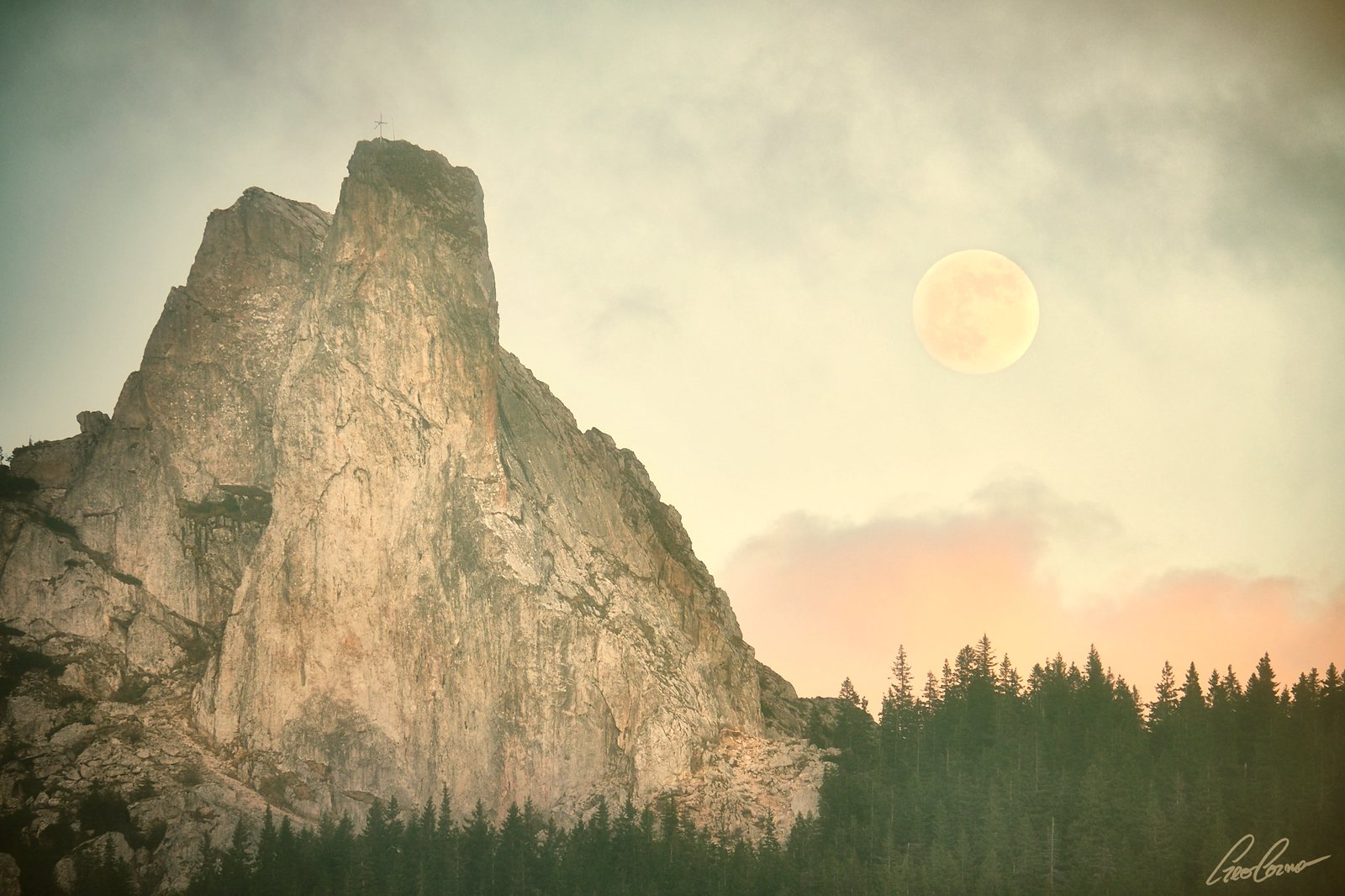
And there's something else, beyond any esotericism. The Pietrele Doamnei are Mesozoic limestone towers, full of corals and ammonites, a summit broken by frost and thaw into rocks that reach 70 metres. In other words, what you see up there, the highest point on the mountain, was once the floor of a warm sea. The human heart works the same way: what hurts deepest ends up, in time, highest, and from there you see everything.
Tradition says that towards the end of the 15th century the venerable Sisoe lived here in a hermitage. And when Petru Rareș was deposed, in 1538, his wife Elena and the children hid on Rarău, protected by the monks. The Tatars who attacked the treasure cave couldn't get in: a heap of boulders collapsed on them. The Lady is said to have declared “this is the price of our rescue”, and the rocks have been called the Pietrele Doamnei, the Lady's Rocks, ever since.
Read the legend once more, but not as history. A hunted woman, children by the hand, leaves her fortune behind and prays. The mountain answers not by opening but by closing: it covers the treasure, buries the threat and leaves her alive, poor and whole. That's what the heart does when it heals. It doesn't recover what it lost. It gives up the treasure to keep the children.
Carl Gustav Jung wrote a great deal about the mountain as an image of the Self: the climb in his patients' dreams wasn't about performance but about individuation, the slow road by which a person becomes who they are, gathering the pieces they left along the way. “Who looks outside, dreams; who looks inside, awakes,” he wrote in a letter. And the mountain has a strange property: it makes you look outward so hard that you end up, without meaning to, inside.
The forest at the start is what Jung would call the descent into the shadow: darkness, effort, no view, just you and what you carry. The meadow with the sun ahead is the threshold. And the Pietrele Doamnei, the white vertical rocks with the cross on top, are what the alchemy he studied all his life calls albedo: the whitening, the cleansing, the moment when what was burned in you becomes white, weightless ash. It's no accident that the people here put a cross on the highest rock. They felt that something ends there.
Today's psychology says the same thing in other words. The researchers who study awe (the state you're in before a landscape bigger than you) have found that it shrinks the “self”, makes people more generous and less caught up in their own worries. And attention restoration theory explains why your mind is clear after a day on the mountain: nature asks for a soft, effortless attention that lets the tired part of the brain rest. Nobody has measured a chakra. But the chest that opens on its own in the meadow, that has been measured.
I won't give you rituals. I'll tell you what I do, since then, and what I tell the guests who ask.
I got home around eleven. I still have the sorrow, I think I always will, but it's no longer mine. It's the mountain's; it put it under a stone and looks after it. I was left with the cherry tree in the garden, which I saw again, and with a kind of warmth in the chest that lasts about three days and that I can only explain with an old word: unstruck.
If Rarău is the heart of the country, then it's a heart that has been through a lot: seas, ice, Tatars, Austrians, hermits and thousands of hurried hikers. And it still beats. Climb it as such. The sport comes anyway.
If that's your way of travelling, we've put together three days in the same spirit: Spiritual traveller, with the Hermitage, the painted monasteries and a morning on Rarău. And for what's good to know before any climb: the gear and bears.
The idea of Rarău as the heart chakra circulates in Romanian esoteric tradition and in the press (Antena 3, Evenimentul Zilei); it is not a scientific or medical claim, and we read it as a symbol. The historical details and legends are those kept by Rarău Monastery and the Rarău Hermitage. Photos: George Cozma (the first two) and Cornelia Zăvoianu (the forest), colour treatment La Cuib. Hiking is at your own risk; Salvamont: 0725 826 668.
More from the journal
If you liked what you read
The whole house, seven people, no platform fees. We'll tell you which road to take and when the light goes.
 Via Transilvanica